
A visitor arriving on Earth from any other planet would be immediately struck by the sheer beauty and abundance of this place we natives take for granted. Pure air to breathe. Sweet water to drink – or dive right into. A perfect temperature range to sustain life. Endless landscapes and waterways, everchanging skies. A vast proliferation of flora and fauna. Delicious food growing right out of the dirt. A seamless web of living ecosystems, from the poles to the tropics, the mountains to the sea . . .
One of the poet’s gifts is to see this amazing world as though for the very first time, like that hypothetical visitor, and somehow capture it in human language. “Earth Poetry” is any poem that reminds us what a breathtaking place we call home, whether the poet’s inspiration is a caterpillar on a leaf or the Aurora Borealis.
“Earth Poetry” isn’t something I invented. It’s a name I made up for something I noticed after many years of writing and reading poetry – something so basic and obvious that it’s rarely mentioned by literary critics or English professors. But once I started paying attention, I realized that nature is a perennial theme and a recurrent motif in much of the poetry I happen to read, and in my own work as well. In fact, images, metaphors, and direct experiences of nature are so pervasive in the poetry of every culture and age that “Earth Poetry” can be legitimately called a universal poetic tradition.
* 2 *
Immersed in a world of our own making, modern humans have forgotten how absolutely dependent we are on nature’s good graces. Re-awakening that awareness is crucial to turning civilization back from the brink of catastrophe. This seemingly impossible feat will require more than a mere intellectual grasp of the crisis. In fact, a rational, left-brained understanding tends to paralyze us in the face of facts and statistics that tell us we’re doomed. Meeting the challenge will require the kind of emotional charge that impels a mother of any species to defend her young, or any indigenous society to defend its land, no matter what the odds of success.
And though we identify personally as citizens of nations, residents of towns or cities, members of religious or cultural traditions, fans of sports teams or entertainers, users of technology, heirs of human civilization, at bottom we are all indigenous to the living planet that feeds us. If we don’t defend it, nobody will.
Earth is our home; there is no place to retreat to. The layers of civilization we have painted over this fundamental truth are dangerous delusions. Only penetrating to the spiritual core of our true deep identity, where human nature and Mother Nature are one, can awaken us from delusion and despair.
* 3 *
It is possible in our postmodern age to live one’s entire life without ever venturing outside of the human realm. The living room, the kitchen, the bedroom; the office, the restaurant, the bar; the mall, the museum, the university; the city, the suburbs and the roads between them; politics, popular culture, the economy; language, mathematics, technology, the arts, the media, the internet – these constitute the “natural” habitat of modern humans. It can be an all-consuming, even overwhelming place to live.
Yet all its complexity and intricacy is literally nothing compared to nature’s. Yes, few places still exist where wild nature survives intact, where civilization has not left footprints, artifacts, litter. But even in downtown Manhattan or London or Calcutta or Beijing, the human milieu is a mere subset of nature. Nature still feeds us, GMOs or no GMOs. Water is still the basis of our metabolism. The raw material for every high-tech device must still be dug from the soil.
Life without nature to stand on is simply unimaginable – not just a fantasy but a logical absurdity. This is a basic truth which our entire society has somehow managed to miss, to our imminent peril.
But once you step outside of the world humanity has made and experience what lies beyond, the world where nature rules, you can never forget. You can never again mistake the human habitat for the totality of life on Earth. Even if you get only one glimpse of wilderness in your entire life, you will never be the same.
Your reaction might be to run back inside and slam the door, fire up your bulldozer or your chainsaw, grab your telescope or microscope and commence counting and measuring and graphing and analyzing. But you can’t go back to the smaller, tamer world contained within human boundaries. Your imagination is forever freed from the civilized limitations of the human ego.
You might even write a poem.
* 4 *
In the beginning, all poetry was Earth Poetry. Our earliest ancestors lived immersed in the natural world; it was all they knew. The earliest art, mythology, and religion sprang from their intimate relationship with nature’s splendors, wonders, and terrors. “Mother Earth” may have been the very first poetic metaphor.
In our modern world, to journey into Earth’s remaining wilderness often evokes the same sense of awe and humility our ancestors must have felt. But nature is not confined to nature preserves. If we look, we’ll find it everywhere: in our gardens, our pets, our children. It’s nature that provides the food, water, and oxygen that keeps us alive. Nature is our blood, bones, and cells. Nature is birth and death. Nature is life itself.
A sense of kinship with nature has been a constant thread through the poetry of every time and place, linking us to those distant ancestors and re-kindling our relationship with our metaphorical Mother. Many of today’s poets carry on this ancient duty, praising nature’s intricate and awesome beauty and pondering its mysteries. Earth Poetry speaks of the natural world not as something we admire from a distance or study under a microscope, but as a community we belong to, an ongoing web of relationships that sustains us as it does every other living creature.
As Earth Poet emeritus Gary Snyder puts it: “I like to think that the concern with the planet, with the integrity of the biosphere, is a long and deeply rooted concern of the poet for this reason: the role of the singer was to sing the voice of corn, the voice of the Pleiades, the voice of bison, the voice of antelope. To contact in a very special way an ‘other’ that was not within the human sphere; something that could not be learned by continually consulting other human teachers, but could only be learned by venturing outside the borders and going into your own mind-wilderness, unconscious wilderness.” (The Old Ways, “The Politics of Ethnopoetics,” p.36-7)
* 5 *
Spiritually, nature has been my text and my teacher since I first paddled into the Boundary Waters wilderness of Minnesota and Ontario – a pristine wilderness just recently opened to copper mining by act of Congress. My visit came at a seminal time, during the summer after ninth grade, when I was a misfit teenager trapped in a suburban Chicago high school. My fellow freshmen considered me a curiosity because I had grown up overseas, a missionary kid. One day my Dad brought home a brochure describing a summer-camp canoe trip sponsored by the Methodist church. My older sister Ruth and I signed up.
That trip turned out to be the first of many. I learned more every summer during ten days on the water than I did in the entire school year in between. What I was learning about nature was inseparable from what I was learning about myself. Each trip was a new initiation as my strength and confidence increased and my canoeing skills improved, summer after summer. I was also learning to find my place in a group as we traveled from lake to lake, set up camp, cooked and cleaned up, rolled up our tents and launched our canoes again, bonding day by day into a nomadic community of a dozen or so teens and a few adults.
Returning home from the wilderness was always hard. Traveling back from the North Woods to the suburbs of Chicago – a twelve-hour school bus ride – never failed to plunge me into adolescent depression. First the fences and telephone poles would appear; then the gas stations and fast-food restaurants; eventually the shopping malls and subdivisions of identical houses. Mile by mile, I would watch a time-lapse re-run of the development of civilization through the window of the bus. And with every mile my depression would deepen.
I didn’t consider myself a poet in those days, but at least one poem has survived to show that I attempted to preserve the highs of those canoe trips or the lows of those bus rides by writing poetry. But as I began to develop as a poet, wilderness became one of my perennial poetic inspirations and remains one to this day. And as I developed a spiritual sense of my path through life, I began writing poems not just about nature, but about my personal relationship with it.
This is “Earth Poetry”: the poet as participant rather than spectator in the creativity of nature and the regenerative cycle of life on Earth.
Note: As always, these are my personal opinions and do not represent any organization I’m involved in. If my words resonate for you, please share widely. You can subscribe at StephenWing.com (and unsubscribe at any time). Read previous installments of “Wingtips” here. Contains no AI ingredients!
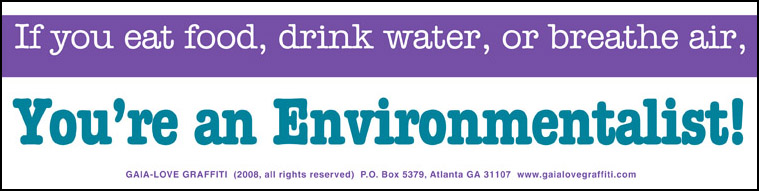
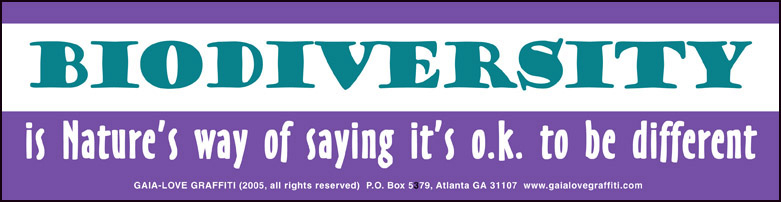
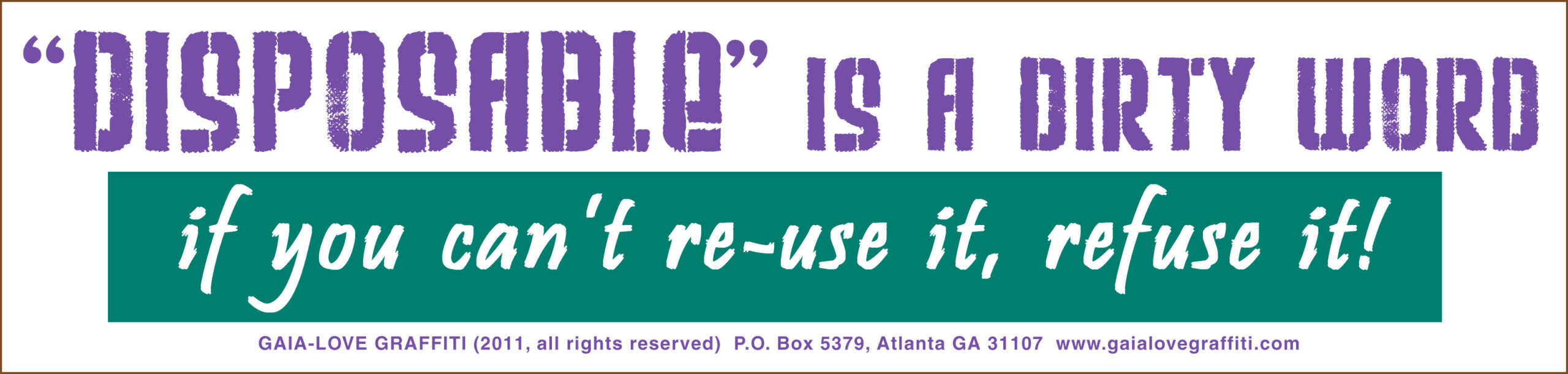
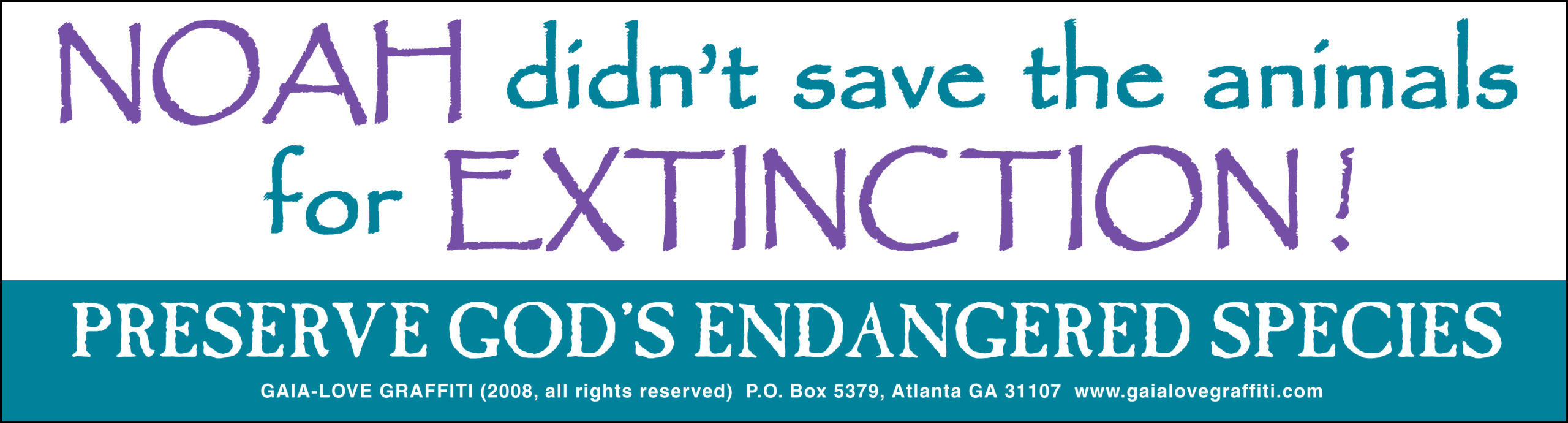
 Wing’s original
stickers available at
GaiaLoveGraffiti.com










0 Comments