Poetry is an act of the imagination: not just imagination itself, but the act thereof. Poetry is imagination in action. But can poetry be activism?
“Political poetry” is frequently dismissed as the practice of dragging poetry down to the level of politics – corrupt politicians, feuding parties, rigged elections – the poet as propagandist. But it also has the potential to raise politics up to the level of poetry: an act of imagination which reveals the hidden interconnections that link us all.
Imagination has more than one face, of course. The primary form it takes in the United States, from Hollywood to the New York Times bestseller list, is fantasy. The romantic fantasy of boy-meets-girl, the mythic fantasy of good-guy-vs.-bad-guy, the escapist fantasy of soap opera and sitcom and the Broadway musical.
Our national identity is founded on the adolescent fantasy of “Manifest Destiny”: the heroic wresting of a wild continent from savages, the innate superiority of everything white, male, and “made in the U.S.A.” Donald Trump’s call to “Make America Great Again” invokes this self-serving fantasy of the glorification of war and the triumph of the violent.
But imagination is also the root of compassion: the capacity to willingly project oneself into other people’s lives and surroundings, vicariously experience their experiences and feel their feelings. Arousing this deeper faculty of imagination, I believe, is the true calling of the political poet.
Political issues like war, poverty, and racism are often reduced to numbers – statistics, demographics, polls and percentages, dollars and cents. They can also be too easily elevated to the abstract plane of principles and ethics. Political poetry can take these issues back to where they started: real people facing real situations that engulf them and those they love, raw emotion in real time, real-life tragedy and heroics.
At its best, political poetry slips across the lines of partisan ideologies and attitudes to confront us with the actual people involved in a particular issue, people on both sides of any conflict, people we may disagree with politically but can relate to emotionally. It can place us inside the skin of someone we have never met, creating an unexpected opening for a shift in our habitual biases and priorities. It allows us to peer surreptitiously into the lives of people halfway around the world who are suffering or grieving or starving or courageously resisting, and begin to care about their fate.
Prophets & Visionaries
There’s another superficial gap that imagination can help to bridge. That’s the gap between our self-centered complacency and our responsibility to others. Poetry can help to illuminate the ways we benefit from the plight of those people halfway around the world – how just sitting in our easy chairs, enjoying our privileges, helps to oppress those who manufacture and deliver our luxuries at slave wages. What connects us with the impoverished and exploited of this world is not just some lofty compassion. It’s culpability. It’s not just a moment of empathy, or even outrage. It’s a call to action.
But the poetic imagination isn’t limited to the world as it is. Political poetry can conjure up a hypothetical future, a better world . . . or hell on Earth. Poetry can be visionary, and poetry can be prophetic: two more faces of imagination.
The geopolitical strategists of the Pentagon have invested billions of our tax dollars in the sophisticated technology of nuclear holocaust. The executives of the “defense” industry see only the colossal profits they are raking in. Both seem to lack the imagination to viscerally grasp the horrors they have unleashed by keeping the nuclear time-bomb ticking. But somebody must imagine it, and must communicate this bleakest of prophecies in language vivid enough to spark resistance to the ultimate delusional fantasy – “victory” in a nuclear exchange. This is the grim purview of the prophetic imagination.
But it’s difficult to stand firm against the swaggering omnicidal beast of war and violence, or to stand up to the inevitable tyranny it breeds, without an alternative vision. Someone must keep alive the dream of a just society, a fair economy, a peaceable world to come, even a global renunciation of “Mutually Assured Destruction,” no matter how unreachable it seems. Looking back, we can see how the personal convictions of individuals – the Abolitionists, the Suffragettes, the Wobblies, the organizers of Gay Pride – slowly rippled out to become recognized social norms, and were eventually signed into law. These evolutionary strides, which once appeared laughably unrealistic, are gifts of the visionary imagination.
“Pop Culture” & People’s Culture
Poets play a vital role in any authentic living culture. Throughout the Global South poets are heroes, quoted and recited and revered by ordinary folks. Poetry in much of Latin America or Africa tends to be political by default, either on or just below the surface, because in such places life itself is political; there is no place to hide from political realities. But the same is increasingly true among poor and working-class people everywhere. Only the moneyed classes can afford an insulating layer they call “culture” to shield them from the world of hardship and brutality.
“Culture” is one of the perks of the American middle class as well, in the form of “popular culture”: cartoons and commercials, video games, Netflix, MTV, sports, sex, celebrities, a fantasy playground. In the shadows behind the screen, one of its essential functions is to sidetrack, to distract, to divert our attention as the magician’s other hand slips into our pockets.
True culture, people’s culture, expresses what everyday people see and feel wherever they may be – a housing project, a refugee camp, a prison, the streets – and the anguish and rage that often erupt as a result. This is why Marley and Dylan and Lennon are beloved around the world: they speak to and for all of us, not just the literary intelligentsia, and do not shy away from political truths. Song lyrics are the poetry of people’s culture, even if most songwriters prefer to traffic in fantasy, vying to make their mark on pop culture rather than plumb the deeper fathoms of imagination where compassion, vision and prophecy live.
In his essay “Leaping Up Into Political Poetry,” written during the Vietnam war, the late Robert Bly introduced the poetic metaphor of the leap of association: “Some poets try to write political poems impelled by hatred or fear. But these emotions are heavy, they affect the gravity of the body. What the poet needs to get up that far and bring something back are great leaps of the imagination.”
The disreputable reputation of political poets is not entirely undeserved; the temptation to get preachy and polemical often gets in the way. Hatred and fear have indeed inspired a lot of one-dimensional poetry, as have anger, self-righteousness, and hardline political dogma. But that’s not the whole story. The American literary landscape seems ruled by an unspoken taboo, favoring poetry that confines itself to the personal, the philosophical, the whimsical, the abstract, the esoteric – anything that does not challenge the political and economic status quo.
What Does It Mean?
But poetry was once part of everyday life here in the U.S.A., too. Walt Whitman’s freewheeling free verse scandalized a highly literate nation accustomed to regimented meter and rhyme. His subject matter was equally outrageous, ranging from politics to sexuality to the daily lives of working folk. In his Preface to the 1855 edition of Leaves of Grass he wrote, “Liberty takes the adherence of heroes wherever men and women exist . . . but never takes any adherence or welcome from the rest more than from poets. They are the voice and exposition of liberty . . . to them it is confided and they must sustain it . . . The attitude of great poets is to cheer up slaves and horrify despots.”
But in the 20th century, mainstream poetry became increasingly academic, enamored of classical allusions, intellectual abstraction, and the self-obsessed “confessional” mode. Until the political upheavals of the 1960s, most poets celebrated by the literary establishment were unknown to working people, disconnected from ordinary lives and struggles, uninvolved in the great popular movements for reform.
Step into the world of the poetry slam or hiphop, the cutting edge of poetry today, and the rules of academia do not apply. Many of these poets are using the tools of everyday language to condense their experience of injustice and inequality into poetry that is unabashedly political. They join a long line of rebels and upstarts, the progeny of Whitman: Carl Sandburg, Muriel Rukeyser, Kenneth Rexroth, Thomas McGrath, Meridel le Sueur, Thomas Merton, Allen Ginsberg, Etheridge Knight, Denise Levertov, Amiri Baraka, Audre Lorde, Robert Bly, Galway Kinnell, Yusef Komunyakaa, Carolyn Forché, and others unknown to me, I’m sure.
When I leaf through a copy of The New Yorker looking for poetry, almost without exception I find poets at play, writing enigmatically about trivialities, showing off their technical brilliance while dancing adroitly around substance – entertaining themselves, it seems, at my expense. I find that ironic, considering the in-depth political reporting often found in those same pages.
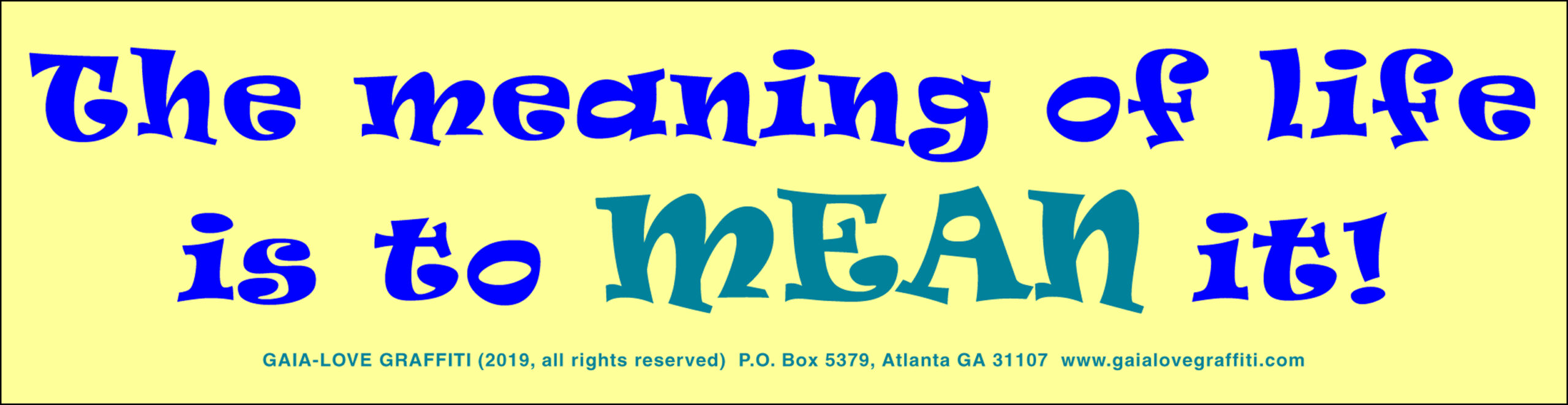
Word games, syntax puzzles, and clever special effects might help to sell a poem to The New Yorker – the pinnacle of poetic prestige – but what is the poet is trying to say? What is the poem about, what does it mean? Not “mean” in the sense of a specific, paraphraseable meaning, but in the sense that “It really meant something to me.” Like so many of the celebrity novelists and nameless content creators who crank out the daily fare of pop culture, these poets seem intent on distracting readers from unpleasant realities, rather than waking them up to their potential as grown-up human beings who share a world with the rest of us. And unfortunately, waking people up grows more urgent by the day.
Next month, Part 2: Democracy & Empire
Note: These are my personal opinions and do not represent any organization I’m involved in. If my words resonate for you, please share widely. You can subscribe (or unsubscribe) at StephenWing.com. Read previous installments of “Wingtips” here.
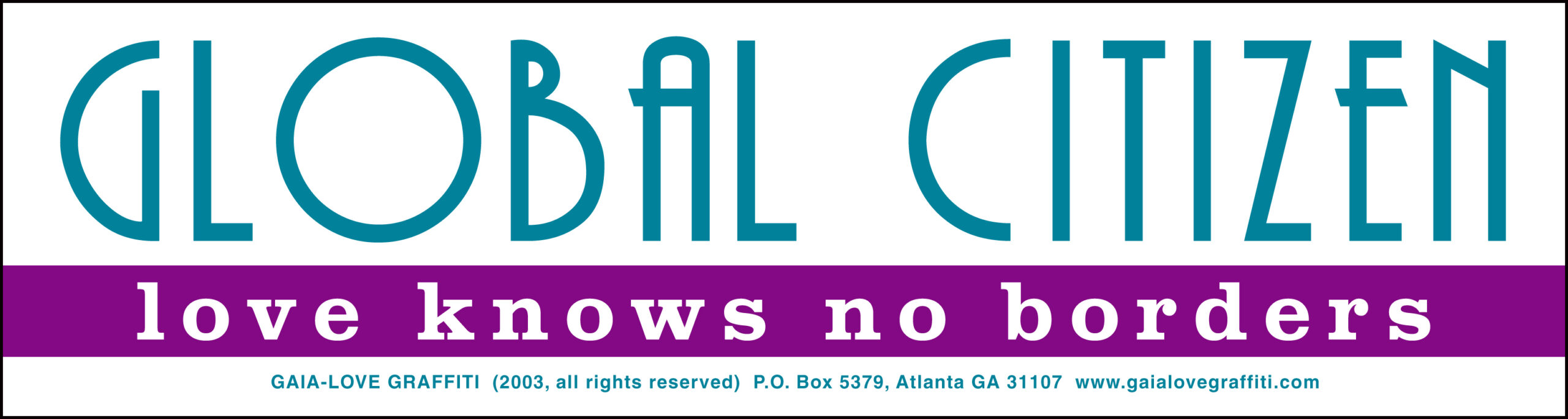
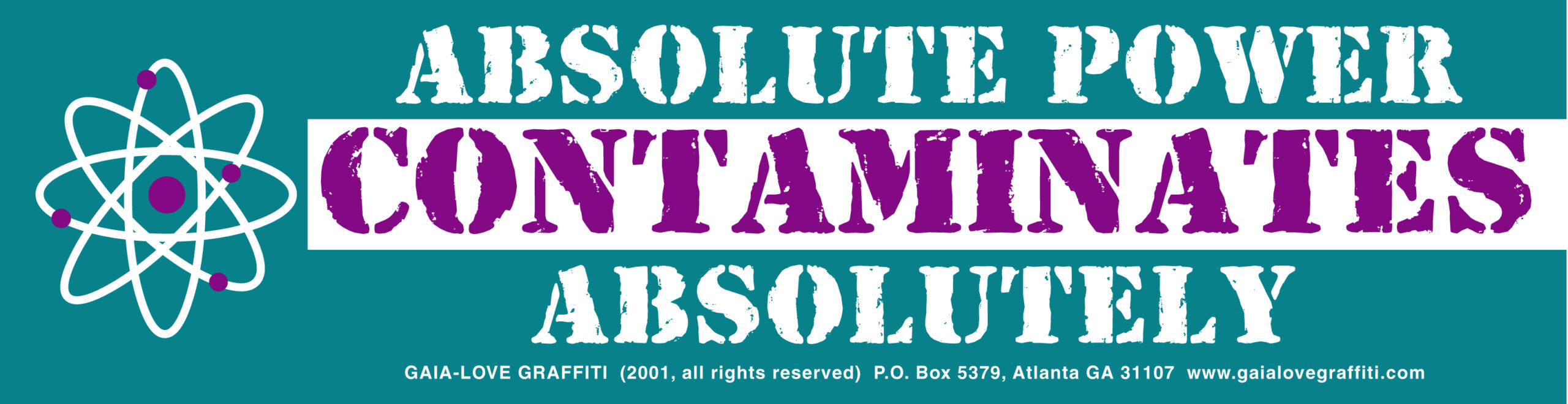
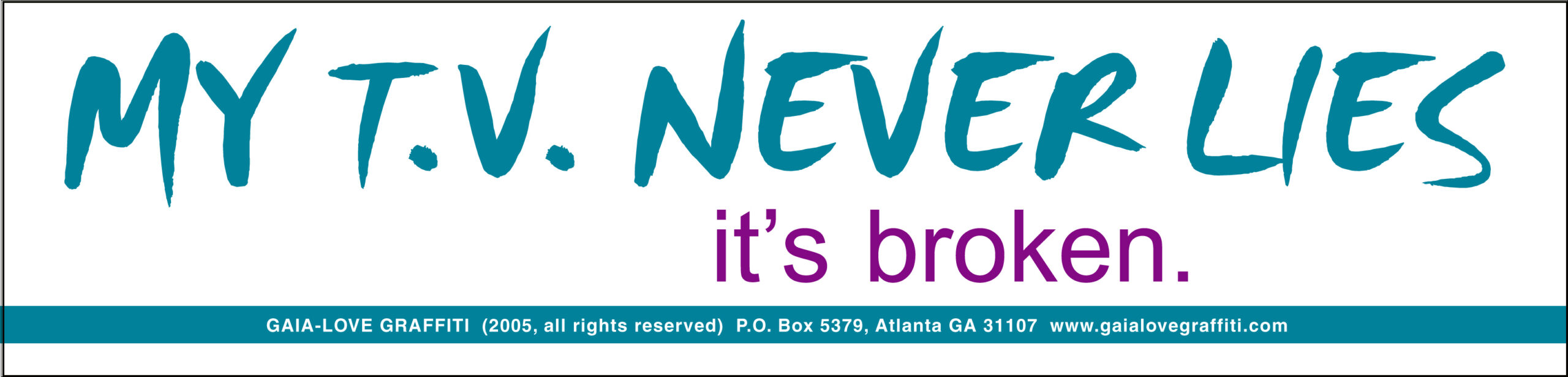
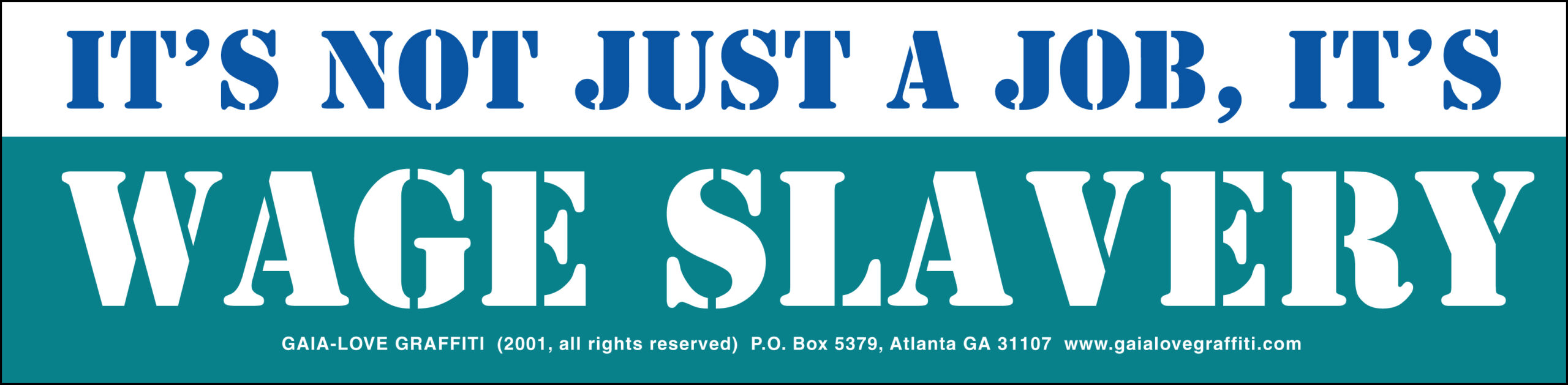
Wing’s original
stickers available at
GaiaLoveGraffiti.com

0 Comments